AI in Fashion Education: Future of Fashion Design & Technology
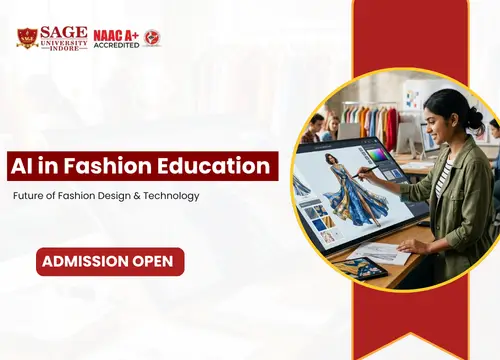
Introduction to AI in Fashion Education
Fashion has always changed alongside society. Shifts in culture, technology, and lifestyle have continuously shaped how designers think and work. Today, artificial intelligence (AI) is becoming part of this evolution. Its presence is not just technical; it is influencing how ideas are developed and how creativity is practiced within fashion.
Role of AI in Fashion Design Process
In design processes, AI is already being used in practical ways. It can assist in generating visual concepts, analyzing trends, and speeding up experimentation. Tasks that once took days—sketching variations or testing combinations—can now be explored digitally in much less time. This does not remove the designer from the process, but it does change how time and effort are distributed. More attention can be given to refining ideas rather than repeating manual steps.
Human Creativity vs Artificial Intelligence in Fashion
There is also a visible concern that technology might reduce the importance of human input. This concern is understandable, especially in a field that relies heavily on creativity. However, fashion is not limited to producing garments. It reflects identity, emotion, and cultural context. These dimensions come from lived experience, something machines cannot fully replicate. AI can support decision-making, but it does not replace interpretation or meaning.
It is more useful to see AI as a tool rather than a substitute. It offers suggestions, alternatives, and efficiency, but the direction still depends on the designer. The final outcome—its relevance, narrative, and impact—remains shaped by human judgment. In practice, this creates a collaborative relationship where technology assists but does not lead.
Importance of AI in Fashion Education
This shift has clear implications for fashion education. Traditional teaching methods have focused on building technical skills, understanding materials, and developing design fundamentals. These areas remain important, but they are no longer sufficient on their own. Students are now expected to work across both physical and digital environments.
Introducing AI into education does not mean removing existing methods. A balanced approach is more effective. Students can use digital tools to explore ideas quickly and then translate those ideas into physical forms through techniques such as draping, stitching, or textile manipulation. This connection between concept and execution strengthens learning rather than weakening it.
Fashion Technology and Digital Learning
Another noticeable change is the increasing overlap between fashion and other fields. Design today interacts with technology, sustainability, and market behavior. AI naturally pushes students to think beyond traditional boundaries. It encourages them to understand how different systems connect, whether in production, consumption, or communication.
AI and Sustainable Fashion Practices
Sustainability is one area where this connection becomes especially relevant. The fashion industry has been widely criticized for waste, overproduction, and resource use. AI can contribute by making certain processes more efficient. For example, digital prototyping allows designers to test ideas without immediately using physical materials. Predictive tools can also help estimate demand more accurately. When introduced in education, such practices encourage more responsible decision-making from the beginning.
Challenges of AI in Fashion Education
At the same time, there are limitations that cannot be ignored. Not all institutions have access to advanced tools or the infrastructure required to support them. This creates differences in how students are exposed to new technologies. Faculty readiness is another factor. Without proper training, the use of AI can remain superficial and fail to add real value to learning.
Ethical concerns also come into play. Questions related to authorship, originality, and data use are becoming more complex. When a design is influenced by algorithmic input, it becomes necessary to define ownership more carefully. Students need to be aware of these issues and develop a clear understanding of responsible practice.
Future of Fashion Design with AI
Despite these challenges, AI does not disrupt the foundation of fashion education. Instead, it extends it. It introduces new tools and methods while still relying on the designer’s ability to think, interpret, and create. The core of design remains human, even when supported by digital systems.
In the coming years, the ability to balance these two aspects—technology and creativity—will become increasingly important. Designers who rely only on traditional skills may struggle to adapt, while those who depend entirely on technology may lack depth in their work. A combination of both is more sustainable.
Conclusion
In conclusion, AI is gradually influencing how fashion is taught and practiced. It changes workflows, introduces new possibilities, and requires a shift in how skills are developed. However, it does not replace the role of the designer. Creativity, context, and meaning continue to come from human experience. Education, therefore, needs to respond by integrating technology without losing its foundation.
The future of fashion does not depend on choosing between human creativity and artificial intelligence. It depends on how effectively the two are brought together in practice.
If you are interested in building a career in fashion design with modern technology, explore fashion designing courses that integrate AI, digital tools, and industry-focused learning.
Nirantara Hada
Assistant professor
Institute of design