Superfoods & Preventive Healthcare: Benefits, Science & Future
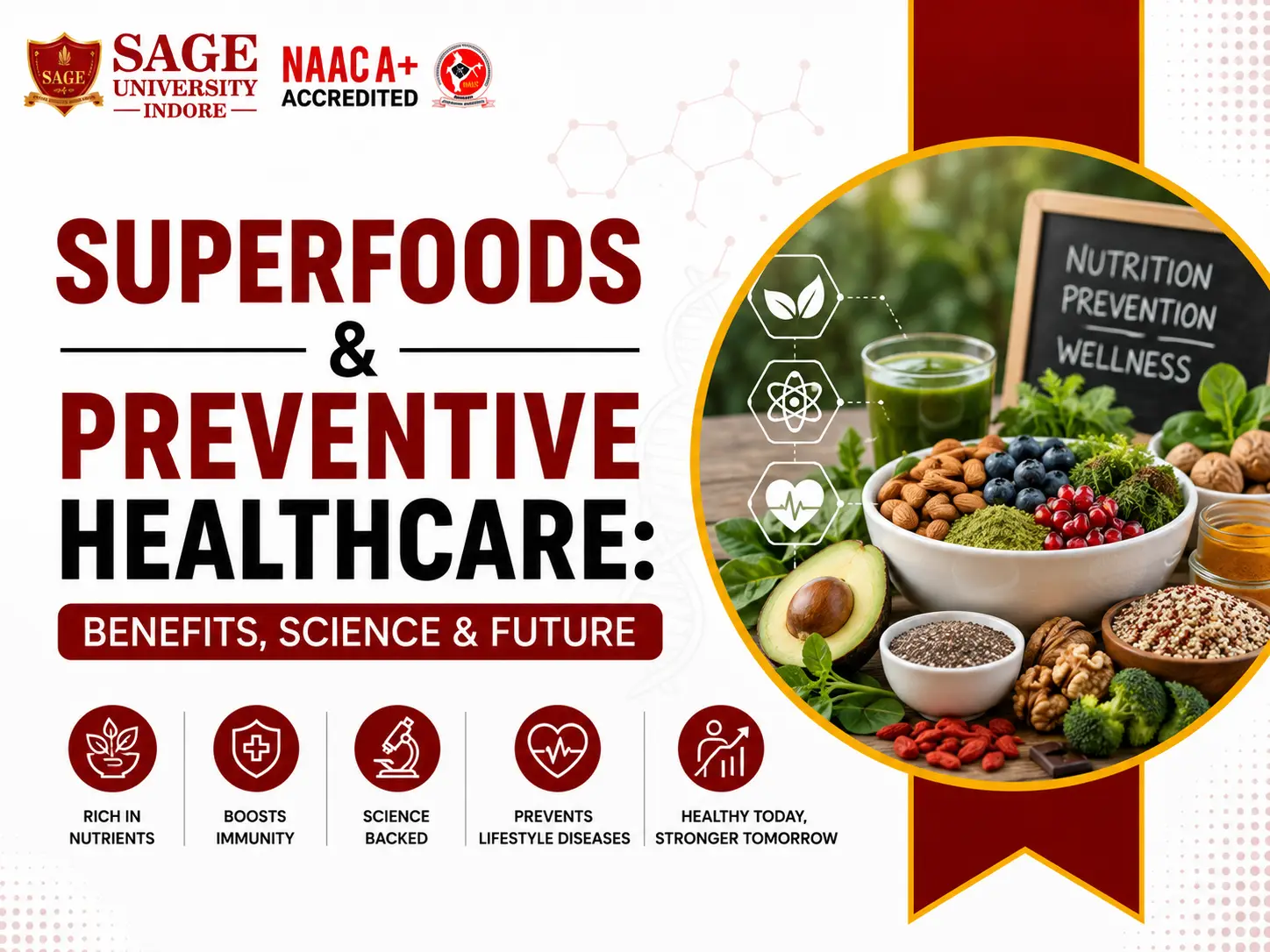
We live in an age of stressful lifestyles, irregular eating habits, and rising chronic diseases. As awareness of preventive healthcare grows, more people in India are looking beyond conventional approaches and paying greater attention to the role of nutrition in maintaining long-term health.
This growing shift has brought superfoods into the spotlight. Superfoods are naturally nutrient-rich foods that contain important vitamins, minerals, antioxidants, fibre, and bioactive compounds. Indian foods such as turmeric, amla, millets, moringa, flaxseeds, and tulsi are increasingly being recognised for their nutritional value.
The idea behind superfoods is not to replace medicines or medical treatment. Instead, they represent an important part of a broader preventive healthcare approach: supporting health through balanced nutrition before illness develops.
What Are Superfoods?
Superfoods are naturally nutrient-dense foods that provide a high concentration of beneficial nutrients and bioactive compounds.
Common examples include:
- Turmeric
- Amla
- Moringa
- Millets
- Flaxseeds
- Tulsi
- Berries
- Walnuts
- Leafy green vegetables
- Chia seeds
These foods can provide antioxidants, vitamins, minerals, fibre, plant-based omega-3 fatty acids, and other compounds that support normal body functions.
For India, this trend is particularly significant because many nutrient-rich foods are already part of traditional diets and local agriculture.
1. The Science Behind Superfoods: What Makes Them Important?
The growing interest in superfoods is supported by research into their nutritional and bioactive components.
Foods such as turmeric, berries, moringa, and millets contain compounds including polyphenols, flavonoids, anthocyanins, vitamins, minerals, and antioxidants. These nutrients and bioactive compounds are associated with processes such as protection against oxidative stress and support for normal metabolic functions.
Research on whole grains, fruits, vegetables, and legumes also highlights the importance of nutrient-rich diets in supporting long-term health.
Traditional Indian foods provide several examples of this connection between food and health. Turmeric, for instance, has long been used in Indian households, while millets are receiving renewed attention because of their fibre and mineral content.
This intersection of food science, nutrition, agriculture, and healthcare is also creating opportunities for scientific research and innovation.
2. Can Superfoods Help Prevent Lifestyle-Related Diseases?
Superfoods should not be viewed as a cure or replacement for medical treatment. However, incorporating nutrient-rich foods into a balanced diet can contribute to healthier eating patterns.
Lifestyle-related health concerns often develop over time and may be associated with factors such as dietary imbalance, physical inactivity, chronic stress, and inadequate sleep.
Foods such as flaxseeds, garlic, tulsi, amla, and millets provide nutrients and bioactive compounds that can support overall nutritional health.
- Flaxseeds: Provide plant-based omega-3 fatty acids and fibre.
- Amla: Rich in vitamin C and polyphenolic compounds.
- Millets: Provide fibre and minerals and can form part of a balanced diet.
- Garlic: Contains bioactive compounds that have been studied for their potential health effects.
- Turmeric: Contains curcumin and other compounds that have attracted significant scientific interest.
The key is consistency and dietary balance rather than relying on a single “miracle food.”
3. Superfoods for Different Life Stages and Lifestyles
Nutritional requirements differ according to age, lifestyle, activity level, and individual needs. Therefore, there is no single superfood that is ideal for everyone.
For Athletes and Active Individuals
Foods such as quinoa, chia seeds, nuts, seeds, and leafy greens can contribute protein, minerals, healthy fats, and other nutrients that support an active lifestyle.
During Pregnancy
Nutrient-rich foods such as leafy green vegetables, dates, and almonds can contribute important nutrients including iron and other minerals. Vitamin C-rich foods can also support iron absorption. However, pregnancy nutrition should always be planned according to individual medical and nutritional requirements.
For Older Adults
Walnuts, leafy green vegetables, millets, and other nutrient-dense foods can form part of a balanced diet designed to support healthy ageing.
The broader principle is simple: nutrition should be adapted to the needs of the individual rather than treating every superfood as universally beneficial.
4. Clinical Nutrition: Connecting Food Science with Healthcare
The role of nutrition extends beyond the home kitchen. Medical Nutrition Therapy (MNT) demonstrates how nutrition can become an important component of healthcare under professional guidance.
Nutrient-dense foods are increasingly discussed in the context of nutritional support, metabolic health, recovery, and dietary management.
This does not mean replacing modern medicine with food. Instead, it highlights the importance of understanding how nutrition, food science, biology, pharmaceuticals, and healthcare can work together.
For example, turmeric, fruits, vegetables, whole grains, millets, and other nutrient-rich foods can be considered within appropriate dietary patterns based on an individual's nutritional requirements.
This growing intersection makes preventive healthcare an important area for students and researchers interested in pharmaceutical sciences, agriculture, life sciences, nutrition, and healthcare.
5. Why Indian Superfoods Are Gaining Global Attention
India has a rich history of nutrient-dense traditional foods. Amla, turmeric, moringa, millets, tulsi, flaxseeds, and other locally available ingredients are increasingly attracting attention from consumers interested in healthier food choices.
The growing demand for healthy and functional foods is also contributing to expansion in the superfood and nutraceutical markets.
This creates opportunities beyond consumption. It opens avenues for:
- Food and nutrition research
- Nutraceutical product development
- Agricultural innovation
- Functional food research
- Pharmaceutical research
- Food processing
- Agribusiness and entrepreneurship
The future of superfoods therefore lies not only in what people eat, but also in how scientists, agricultural professionals, healthcare experts, and researchers understand and develop them.
6. The Future of Superfoods and Preventive Healthcare
The future of preventive healthcare is likely to involve a more integrated understanding of nutrition, lifestyle, agriculture, pharmaceutical sciences, and medical research.
Superfoods are not magic pills, and they cannot replace doctors, medicines, or prescribed treatment. Their importance lies in their nutritional value and their potential role within a balanced and healthy lifestyle.
India already has a diverse range of nutrient-rich foods. The opportunity ahead is to combine this traditional food knowledge with modern scientific research.
When traditional knowledge, scientific evidence, food technology, agriculture, and healthcare come together, superfoods can become part of a broader conversation about preventive health and sustainable nutrition.
Why Superfoods Matter for Future Healthcare Professionals and Researchers
The growing interest in superfoods is creating an interdisciplinary field where multiple areas of education and research intersect.
- Pharmaceutical Sciences: Students can explore bioactive compounds, nutraceuticals, pharmacological research, and functional foods.
- Agriculture: Students can explore the cultivation, production, value addition, processing, and commercial potential of nutrient-rich crops such as millets and medicinal plants.
- Science and Life Sciences: Students can delve into biochemistry, microbiology, nutrition, biotechnology, and the scientific evaluation of bioactive compounds.
This makes superfoods more than a dietary trend. They represent an emerging area where agriculture, science, pharmaceutical research, nutrition, and preventive healthcare meet.
Conclusion: From Traditional Food Wisdom to Preventive Healthcare
Superfoods are not a substitute for medical treatment. However, nutrient-rich foods can play an important role in supporting balanced nutrition and healthier lifestyle choices.
India already possesses a rich variety of traditional foods with significant nutritional value. The next step is to understand these foods through scientific research and responsible application.
From millets and moringa to amla and turmeric, India's food heritage offers opportunities for research, innovation, entrepreneurship, and preventive healthcare.
The future may not be about discovering a single “superfood.” It may be about understanding how nutrition, science, agriculture, pharmaceutical research, and healthcare can work together to support healthier lives.
Frequently Asked Questions About Superfoods and Preventive Healthcare
Superfoods are naturally nutrient-rich foods that contain vitamins, minerals, antioxidants, fibre, and other beneficial compounds. Examples include turmeric, amla, moringa, millets, berries, and flaxseeds.
No. Superfoods cannot replace prescribed medicines or professional medical treatment. They can form part of a balanced diet and support overall nutritional health.
Indian foods such as amla, moringa, turmeric, millets, tulsi, and flaxseeds are naturally nutrient-rich and can provide important nutrients and bioactive compounds. The nutritional value of a food should be considered rather than assuming imported foods are automatically better.
Commonly discussed Indian superfoods include amla, turmeric, moringa, millets, tulsi, and flaxseeds.
Whole foods are generally preferred because they provide a combination of nutrients, fibre, and other naturally occurring compounds. Supplements should be used only when appropriate and, where necessary, under professional guidance.
Superfoods can contribute nutrients and bioactive compounds to a balanced diet. A healthy diet, along with physical activity, adequate sleep, and appropriate healthcare, forms part of a broader preventive health approach.
Superfoods create opportunities for research into nutrient-rich crops, bioactive compounds, functional foods, nutraceuticals, food processing, and potential healthcare applications. This connects agriculture, pharmaceutical sciences, life sciences, and preventive healthcare.