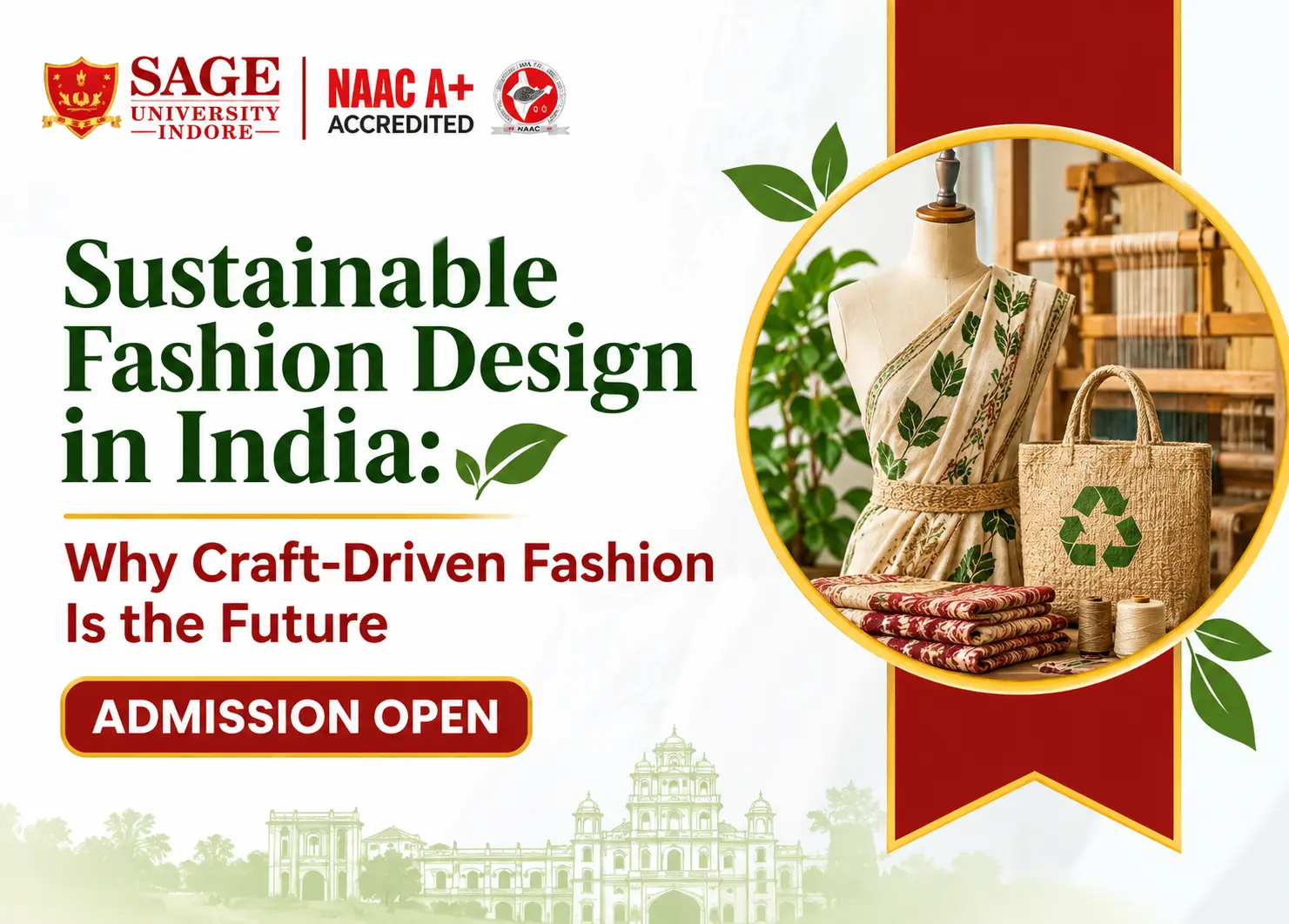
Sustainable Fashion Design in India: Why Craft-Driven Fashion Is the Future
Introduction
The fashion industry is changing. Consumers are looking beyond trends, styles and seasonal collections to understand how their clothes are made, where the materials come from and what impact their production has on the environment. Questions about ethical sourcing, responsible manufacturing and traditional craftsmanship are becoming increasingly important in the way people choose fashion.
This shift has brought sustainable fashion design into focus. It is no longer simply an alternative to conventional fashion; it is an important approach to creating clothing that considers environmental responsibility, material efficiency, cultural identity and the people involved in production.
As someone who teaches fashion design and researches Indian textile crafts, I believe this change also presents an exciting opportunity for aspiring designers. The future of fashion will require professionals who can combine creativity with an understanding of textiles, responsible production and traditional craftsmanship.
India, with its rich textile heritage and diverse artisan communities, has an important role to play in this transformation. By connecting traditional crafts with contemporary fashion, designers can create collections that are meaningful, distinctive and relevant to modern consumers.
- Introduction
- What Is Sustainable Fashion Design?
- Why Is Sustainable Fashion Important in India?
- Traditional Indian Textile Crafts and Their Role in Sustainable Fashion
- Bagh Print: A Traditional Craft of Madhya Pradesh
- Why Is Craft-Driven Fashion the Future?
- What Skills Are Required to Become a Sustainable Fashion Designer?
- What Are the Career Opportunities in Sustainable Fashion Design in India?
- How to Start Building a Portfolio in Sustainable Fashion Design
- Study B.Des in Apparel and Fashion Design at SAGE University Indore
- Frequently Asked Questions About Sustainable Fashion Design
- Final Thoughts: Designing a More Responsible Future for Fashion
What Is Sustainable Fashion Design?
Sustainable fashion design is an approach to creating clothing, accessories and textile products that aims to reduce environmental impact while encouraging ethical production, responsible material selection and long-term product use.
It considers the entire life cycle of a garment, beginning with the selection of fibres and fabrics and continuing through dyeing, printing, manufacturing, distribution, use and disposal.
Some important practices in sustainable fashion design include:
- Responsible material selection: Choosing suitable materials such as organic cotton, linen, recycled fibres and responsibly sourced natural textiles.
- Natural and cleaner dyeing methods: Exploring dyeing and printing techniques that can reduce the use of harmful chemicals and manage water consumption responsibly.
- Zero-waste pattern making: Planning garment patterns to minimise fabric waste during cutting and construction.
- Upcycling and recycling: Transforming discarded garments, leftover fabrics and textile waste into new products.
- Ethical production: Encouraging fair working conditions, responsible sourcing and respect for artisans.
- Durable garment design: Creating clothing that can be worn, maintained and valued for a longer period.
The central idea is simple: fashion should not be measured only by how a garment looks, but also by how responsibly it is designed and produced.
Why Is Sustainable Fashion Important in India?
India has a distinctive advantage in the sustainable fashion movement because of its long history of textile production, handloom weaving, embroidery, block printing and traditional dyeing techniques.
Across different regions, artisans have developed specialised skills that have been passed down through generations. These crafts represent more than decorative techniques; they reflect local knowledge, cultural identity and an understanding of materials and processes.
However, traditional crafts also face challenges such as changing consumer preferences, competition from mass-produced products and the need for better market access.
Sustainable fashion creates opportunities to connect these traditional skills with contemporary design requirements.
Modern fashion designers can collaborate with artisans, explore traditional textile techniques, develop new product applications and introduce craft-based collections to wider markets.
This approach can contribute to:
1) Preserving traditional Indian textile knowledge.
2) Creating opportunities for artisan communities.
3) Encouraging responsible material and production choices.
4) Promoting India's textile heritage to new audiences.
5) Developing distinctive fashion products rooted in regional identity.
For young designers, understanding this connection between heritage and innovation can become an important part of their creative journey.
Traditional Indian Textile Crafts and Their Role in Sustainable Fashion
India's textile heritage offers a wide range of techniques that can inspire contemporary fashion design. Handloom weaving, block printing, embroidery, resist dyeing and hand embellishment provide designers with opportunities to experiment with textures, patterns and materials.
Some traditional techniques that can contribute to craft-driven fashion include:
1. Handloom Weaving
Handloom weaving represents an important part of India's textile heritage. It involves creating fabric using manually operated looms and offers designers opportunities to explore different yarns, structures, textures and patterns.
2. Block Printing
Traditional block printing uses carved wooden blocks to transfer patterns onto fabric. Different regions of India have developed distinctive printing styles, making this technique an important source of inspiration for apparel and textile designers.
3. Natural Dyeing
Natural dyeing involves obtaining colours from sources such as plants, roots, leaves and other naturally occurring materials. Responsible dyeing practices also require attention to water use, processing methods and the materials used to fix colours.
4. Traditional Embroidery
Indian embroidery traditions offer a wide range of stitches, motifs and surface techniques. Designers can adapt these methods for contemporary garments, accessories and textile products while respecting their cultural context.
Bagh Print: A Traditional Craft of Madhya Pradesh
Madhya Pradesh offers an inspiring example of India's textile heritage through Bagh print, a traditional hand block-printing technique associated with Bagh town in Dhar district.
Bagh printing is recognised for its characteristic combination of deep red and black colours, geometric arrangements and floral patterns. The traditional process involves carved wooden blocks and carefully prepared fabric, with natural dyeing techniques forming an important part of its heritage.
Each printed textile reflects the patience, experience and technical knowledge of the artisans involved.
What makes Bagh printing particularly interesting from a fashion design perspective is its potential for contemporary interpretation.
For example, a designer can explore how traditional Bagh motifs can be incorporated into modern apparel silhouettes, scarves, jackets, dresses and accessories. The patterns can also inspire textile surface development, embroidery and other design explorations.
However, using a traditional craft in contemporary fashion requires more than reproducing its motifs. Designers need to understand its origins, techniques and cultural significance. They should also recognise the contribution of artisans and encourage meaningful collaboration.
Why Is Craft-Driven Fashion the Future?
Craft-driven fashion combines traditional craftsmanship with contemporary design thinking. It offers an alternative to repetitive, trend-driven production by giving greater importance to design identity, material knowledge and the human effort behind a product.
1. It Helps Preserve Traditional Craftsmanship
When designers collaborate with artisans and incorporate traditional techniques into new collections, they can create opportunities for craft knowledge to remain relevant to contemporary markets.
2. It Creates Distinctive Fashion Products
Traditional motifs, hand processes and regional textile techniques can give a collection a recognisable identity. These elements help designers develop products with a story and design character.
3. It Encourages Responsible Production
Craft-based production can support smaller production quantities, thoughtful material selection and closer collaboration between designers and makers. Its environmental benefits, however, depend on the actual materials, processes and resource management involved.
4. It Connects Fashion with Cultural Identity
Fashion can become a medium for communicating regional traditions, craftsmanship and cultural knowledge. Designers who understand these connections can create collections that go beyond changing trends.
5. It Offers New Opportunities for Designers and Artisans
Collaboration between design professionals and artisan communities can lead to new product categories, contemporary applications of traditional techniques and opportunities for entrepreneurship.
What Skills Are Required to Become a Sustainable Fashion Designer?
- Fashion Design Thinking and Illustration: Research ideas, develop concepts, create mood boards and communicate designs through sketches.
- Textile and Fabric Knowledge: Understanding fibres, yarns, weaves, fabric structures, dyes and finishes.
- Pattern Making and Garment Construction: Knowledge of pattern development, cutting, stitching and zero-waste approaches.
- Sustainable Material Research: Responsible sourcing, recycled materials, upcycling and fabric durability.
- Digital Design Tools: Computer-aided design (CAD), digital illustration and AI-assisted tools for research.
- Quality Control: Garment measurements, construction standards, finishing and durability.
- Communication and Storytelling: Communicating inspiration, materials, processes and cultural significance behind collections.
What Are the Career Opportunities in Sustainable Fashion Design in India?
- Sustainable Fashion Designer: Develops apparel collections using responsible design approaches.
- Textile and Surface Designer: Works on fabric patterns, prints, textures and surface development.
- Fashion Product Developer: Converts design concepts into commercially viable products.
- Craft Revival and Design Specialist: Collaborates with artisan communities for contemporary craft application.
- Fashion Merchandiser: Coordinates product planning, sourcing and communication.
- Sustainable Fashion Entrepreneur: Builds an independent fashion label focused on responsible materials.
- Fashion Sustainability Consultant: Supports businesses in evaluating material choices and production processes.
- Fashion Educator and Researcher: Contributes to design education, textile studies and sustainable practices.
How to Start Building a Portfolio in Sustainable Fashion Design
- Step 1: Study One Traditional Craft: Research its history, techniques, materials and cultural significance.
- Step 2: Understand the People Behind the Craft: Explore the work of artisans and learn directly from craft practitioners.
- Step 3: Experiment with Responsible Materials: Work with natural fabrics, leftover textiles or deadstock materials.
- Step 4: Develop a Small Fashion Collection: Create a capsule collection inspired by your selected craft.
- Step 5: Document Your Design Process: Include research notes, mood boards, sketches, fabric swatches and final photographs.
- Step 6: Participate in Design Activities: Take part in exhibitions, workshops and competitions.
Study B.Des in Apparel and Fashion Design at SAGE University Indore
The Institute of Design at SAGE University Indore offers a Bachelor of Design (B.Des) in Apparel and Fashion Design, providing students with an opportunity to explore creative concepts alongside technical aspects.
Key curriculum areas include:
1) Fashion design fundamentals and illustration.
2) Textile studies and fabric understanding.
3) Pattern making and garment construction.
4) Fashion technology and digital design tools.
5) Portfolio development and creative presentation.
6) Consumer behaviour and fashion-related research.
7) Quality control and garment finishing.
Frequently Asked Questions About Sustainable Fashion Design
1. What is sustainable fashion design?
It is an approach to creating clothing that considers environmental impact, material selection, ethical production, waste reduction and durability throughout the product life cycle.
2. Why is sustainable fashion important in India?
Because of India's rich heritage in handlooms, block printing and embroidery, connecting traditional crafts with contemporary fashion supports artisan communities and responsible production.
3. What is craft-driven fashion?
It combines traditional craftsmanship, regional techniques and contemporary design to create distinctive products.
Final Thoughts: Designing a More Responsible Future for Fashion
The future of fashion will depend on the ability of designers to balance creativity, innovation and responsibility. India's textile heritage provides a valuable foundation for this transformation.
For aspiring designers, sustainable fashion is an opportunity to develop a career that combines artistic expression with an understanding of materials, people and production processes.